"Full Self-Driving" was the Advertisement
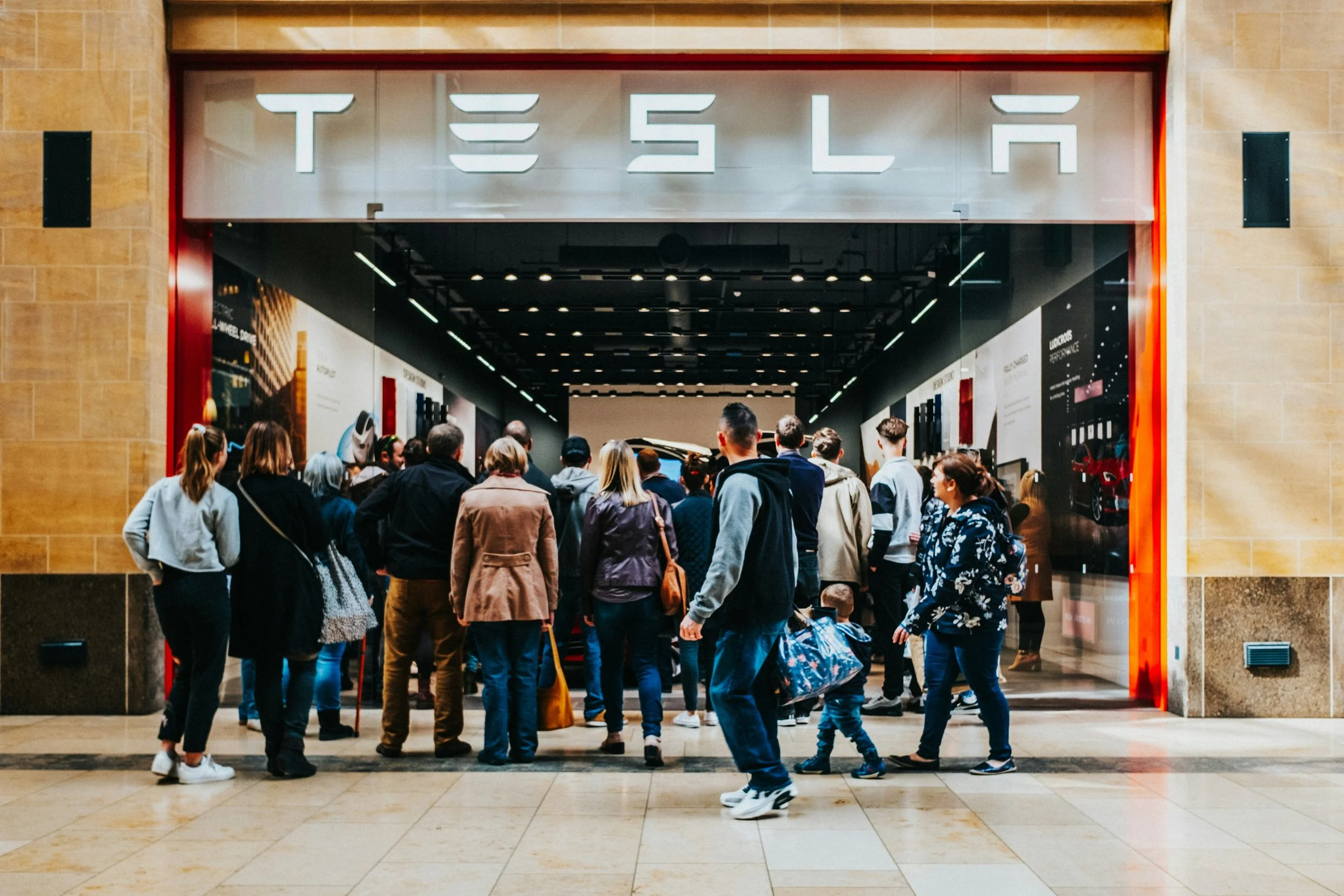
Photo by Chris Boland on Unsplash
This is a story about a name. That can sound like a small thing to build an investigation around, but in advertising, the name usually is the pitch. Almost nobody cross-checks a spec sheet before they buy. They buy what the name promises, and "Full Self-Driving" is one of the biggest promises a car company has ever printed on an order form.
Just here for the practical part? Skip to the buyer's checklist
Four regulators on two continents have looked at the same question: can a product's name itself be a false claim? Tesla has lost that argument in Munich, in Paris, and in Sacramento. It is now suing to have the finding reversed.
In December 2025, a California administrative law judge did something regulators had circled for years without quite doing. He ruled not on a brochure or a press release, but on the name itself.
The term "Full Self-Driving", the judge found, was unambiguously false and counterfactual. His ruling on "Autopilot" was almost as harsh: he described Tesla's naming as following a long, unlawful pattern of using ambiguity to mislead buyers. The California DMV adopted his findings and ordered a 30-day suspension of Tesla's licence to sell cars in the state, its largest US market, unless the marketing was corrected within 60 days.
Tesla complied. In January it dropped "Autopilot" as a standalone product name in the US and Canada. By 17 February 2026, the DMV confirmed the correction was enough, and no suspension followed.
Then, six days later, Tesla sued the DMV to have the false advertising finding reversed.
A company that changed its marketing to satisfy a regulator is now fighting in court to establish that the marketing was never unlawful in the first place. That matters, because if the finding stands, it becomes a precedent Tesla has to answer for everywhere it uses the same name.
Why the name matters legally
Many people assume misleading advertising has to be intentional. Under European law, it does not.
Article 6 of the EU's Unfair Commercial Practices Directive defines a misleading action as one that contains false information, or that in any way, including through its overall presentation, deceives or is likely to deceive the average consumer about what a product actually does, and causes them to make a purchase decision they otherwise would not have made.
Two things matter here. Intent is not part of the test. And "overall presentation" is broad enough to include a product's name, which is why a name can be challenged in court at all, rather than just criticised as poor marketing.
A regulator does not need to prove what Tesla believed about its hardware in 2019. It only needs to show what a reasonable buyer understood in the showroom.
What the company genuinely believed internally is legally beside the point, which is convenient, since nobody outside Tesla can know it anyway.
Munich, 2020: the first ruling on the word
The earliest legal test came from Germany, brought not by a regulator but by the Wettbewerbszentrale, a private watchdog for fair competition.
On 14 July 2020, the Landgericht München I ruled that Tesla's German advertising was a misleading commercial practice under the Act against Unfair Competition, and banned further use of the claims. The phrases at issue were Autopilot inklusive and Volles Potenzial für autonomes Fahren: Autopilot included, and full potential for autonomous driving. The court found these claims, together and separately, would lead an average buyer to believe the cars could already drive themselves, and that doing so was legal. Neither was true.
Andreas Ottofülling, the watchdog's counsel, made a point that has come up in every case since: Germany had no legal framework for autonomous urban driving at all.
Tesla later won on appeal. The Higher Regional Court allowed the company to keep using the terms, on condition it stopped promising that autonomous features would arrive by the end of that year. Tesla softened its wording on its website and carried on. So under German law today, the name survived. Only the deadline did not.
Paris, 2025: a six-count finding
France's investigation began in 2023, triggered by consumer complaints filed through the government's SignalConso platform, and concluded on 24 June 2025.
France's consumer protection agency, the DGCCRF, found deceptive commercial practices in how Tesla marketed the autonomous driving capability of its cars, in the availability of certain options, and in its trade-in offers. Its conclusion was that the marketing overstated what the cars could actually do, and that this amounted to false advertising. Tesla was given four months to fix it, with a penalty of €50,000 for every day it failed to comply after that, a figure the agency said reflected how serious the practice was.
The FSD finding wasn't the only issue. The same decision also cited sales contracts missing delivery details, prepayments that undercut customers' right to cancel, missing receipts for cash payments, and delayed refunds. The French findings describe a pattern across the whole buying process, not one overreaching ad.
Amsterdam, 2026: the approval that settles the meaning
For years, when owners asked when Full Self-Driving would actually drive itself, the answer was that regulators hadn't approved it yet. That answer couldn't really be tested from outside.
Now it can. On 10 April 2026, the Dutch vehicle authority RDW issued the first provisional EU type approval for FSD (Supervised), after about eighteen months of assessment and more than 1.6 million kilometres of European testing. The Netherlands, Belgium, Denmark, Lithuania and Estonia recognised it.
The wording of that approval matters, because RDW used Tesla's own product name and then immediately narrowed what it meant. Its own announcement names the approval like this: "Tesla's driver assistance system, FSD Supervised (Full Self Driving Supervised)." The brand name stays. What changes is the category in front of it: an assistance system, not an autonomous one. RDW approved that system under UN Regulation 171, which covers what the rules call Driver Control Assistance Systems, together with an exemption under Article 39 of EU Regulation 2018/858 for technology the harmonised rules haven't caught up with yet. In its published explanation, RDW says plainly that a car with FSD Supervised is not self-driving, that it is a driver-controlled assistance system, and that the driver stays responsible and must remain in control at all times. The approval owners had waited seven years for was granted on the explicit condition that the car cannot do the thing its name describes.
It's worth comparing the two announcements made that day. RDW set out the classification and the driver's continuing responsibility. Tesla Europe posted that FSD Supervised had been approved in the Netherlands and would roll out shortly, described the system as trained on billions of kilometres of real-world driving data, and said no other vehicle could do this. Elon Musk added that the regulator had been rigorous. Neither Tesla statement mentioned Level 2, or the assistance category the approval actually covers. Tesla does disclaim full autonomy elsewhere: the word "Supervised" is in the product's own name, and its manuals require an attentive driver throughout. But on the day the classification became official, it was the regulator who spelled it out, not Tesla.
The approval covers Tesla's fourth-generation computer, HW4, only.
Documents released under freedom-of-information requests show Tesla applied on 5 November 2024, and that the whole application, meaning the vehicles, the test setup, and the hardware, was built around HW4 specifically. On 13 May 2026, RDW confirmed in writing that it holds no record of any application involving the earlier HW3 hardware. No application means no refusal, and no refusal means no appeal.
In April 2026, Elon Musk confirmed HW3 would not reach unsupervised driving, and Tesla offered affected owners a discounted trade-in or a hardware upgrade.
That is what turns this from a question of wording into something you can actually measure. For the several hundred thousand European cars running HW3, "Full Self-Driving" wasn't an optimistic name for something still in development. It was the name of a system their car was never even entered to be tested for.
Selling Full Self-Driving to cars that cannot run it
Tesla fitted HW3 to European cars from 2019 until its Berlin factory switched to the newer computer in May 2024. That's several hundred thousand vehicles sold over five years, many with Enhanced Autopilot or Full Self-Driving bought on top as a paid option.
What buyers were told, consistently, was that the car already had what it needed. The hardware was enough. The software was coming. The only thing missing was regulatory approval. On that basis, people paid up to €6,400 for a package whose value depended almost entirely on the future.
Then the approval arrived. RDW granted it in April 2026, and Belgium, Denmark, Estonia and Lithuania recognised it soon after. The thing owners had waited seven years for finally became legal.
It covered HW4 only. The cars whose owners had already paid were not included, and the regulator's own records show they were never even submitted for assessment.
So what happens when the owner of one of those older cars tries to buy the subscription today? As of August 2026, the answer is that Tesla still sells it to them.
Britain: banning the words
The clearest response so far has come from a country where Tesla's system isn't even on sale yet.
Britain's Automated Vehicles Act 2024 won't be fully in force until the second half of 2027. A pilot scheme for self-driving vehicles opened in March 2026, but it only covers commercial fleets, not private cars. Tesla has said it has no timeline for bringing FSD to Britain.
Even so, the Act includes a rule that reads like a direct response to the last ten years. It sets up its own legal test for what "self-driving" means: a manufacturer has to apply, and the government decides whether a car actually passes it. Once that's in place, using words like "self-driving" or "driverless" for a car that hasn't passed becomes a criminal offence, not just bad marketing. Lawmakers looked at this history and decided the fix was to control the vocabulary itself, and to build the authority to enforce it, before a single such vehicle went on sale.
What Tesla says
Tesla has always said "Autopilot" refers to aviation, where an autopilot assists a pilot who stays responsible, and that its documentation has always required an attentive driver. Responding to the California ruling, a spokesperson said the case was about consumer protection and terminology, and that no individual customer had actually complained.
That point is true, and worth saying plainly. California's regulator brought the case on its own initiative, not because a customer complained. That's fair to note, but it's also how most advertising cases work: the harm is spread across many buyers, so the regulator acts on the public's behalf.
Where things stand
- 14 July 2020
- Munich court rules Tesla's autonomy claims misleading. Overturned on appeal.
- 24 June 2025
- France's DGCCRF finds deceptive commercial practices. €50,000 a day for non-compliance.
- 16 December 2025
- California judge rules the names "Autopilot" and "Full Self-Driving" misleading.
- 17 February 2026
- Tesla's corrective action accepted. No licence suspension.
- 23 February 2026
- Tesla sues the California DMV to reverse the finding.
- 10 April 2026
- Dutch RDW grants the first provisional EU approval for FSD (Supervised). HW4 only.
- 13 May 2026
- RDW confirms it has no record of any HW3 application.
- 6 October 2026
- EU Technical Committee on Motor Vehicles votes on bloc-wide approval.
Germany has refused to follow the Dutch approval. On 17 July 2026, Parliamentary State Secretary Christian Hirte explained why: the exemption doesn't automatically apply across member states, Germany's KBA is still reviewing the filed dossier, and the authority plans to test a Tesla itself rather than rely on paperwork from another country. Hirte said Germany's own decision will come after the EU-wide vote.
Three regulators have found the marketing misleading. One appeal court disagreed. A fourth country is legislating against the terminology before the product has even arrived there. Meanwhile Tesla is doing two things at once: asking Europe to approve the system on 6 October, and asking a Californian court to erase the finding that its name was false.
What happens to older cars isn't just a question about the future. It's happening right now. Tesla is still selling the same subscription, under the same name, FSD (Supervised), to owners of both computers: HW4 cars, which the approval above actually covers, and HW3 cars, which don't appear anywhere in that approval's paperwork. As noted earlier, Tesla was still selling that exact subscription to an HW3 car as recently as August 2026, four months after the HW4-only approval was granted. Tesla has said HW3 owners will eventually be offered an upgrade or a discounted trade-in, but hasn't said when, at what cost, or what happens to owners who want neither. No regulator has ruled on whether it's lawful to keep selling that subscription to HW3 owners. No court has ordered any refunds. Today, several hundred thousand cars carry a name for something they can't do, Tesla is still selling that name to new buyers, and no official has said how this gets resolved.
One thing isn't in doubt: Tesla built something and got it approved. The HW4 system went through eighteen months of assessment and 1.6 million kilometres of European driving. It's now approved for more road than any comparable system on the continent, while every rival is still limited to the motorway.
But that approval is narrower than it sounds. RDW assessed a Level 2 assistance system: whether the car can steer and control its speed safely while a human watches continuously and stays responsible. Nobody has assessed whether HW4 can drive unsupervised, because nobody has asked it to. The claim that HW4 will eventually get there comes from Tesla, not from any regulator. It's the same claim the company made about HW3 back in 2019.
The vocabulary is still a mess
None of this has produced a settled vocabulary. Three systems of meaning sit on top of each other: an engineering ladder with six levels, a set of European legal definitions that start where continuous supervision ends, and marketing language that borrows from both while being bound by neither. A buyer standing in a showroom is expected to sort all of this out alone.
That part is still unresolved, and it will outlast this dispute. Rivals will arrive with their own words for cars that do less than Tesla's. Regulators will keep ruling after the fact, one country and one product name at a time. Until these words mean something fixed at the point of sale, rather than in a courtroom years later, every buyer is left doing the regulator's job for themselves. Most won't even know there's a job to do.
A quick reference guide
So what law actually lets a Tesla drive itself in Europe?
Three things had to line up, and only two of them are about the car.
EU law created the approval. Regulation (EU) 2018/858 is the framework for type approval, and Article 39 is an exception for technology the rulebook hasn't caught up with yet. That's the article the Dutch used to issue the certificate, and the article Belgium, Denmark, Estonia and Lithuania used to accept it.
A UN regulation supplied the test. UN R171 sets out what a Driver Control Assistance System must do: how it steers, how it checks the driver is watching, and when it must shut itself off. That's what Tesla's software was measured against.
The EU's own definition of an automated vehicle never came into it. Regulation (EU) 2019/2144 defines that category, and the definition starts where continuous driver supervision ends. FSD Supervised requires continuous supervision, so it sits outside the automated-vehicle rules entirely.
Short version: this is a European approval, granted under EU procedure, measured against an international assistance standard, for a car that European law doesn't classify as automated at all.
The terms, side by side
SAE J3016, the engineering standard behind the "SAE level" column below, actually runs to six levels, 0 through 5, from no automation at all to full automation everywhere. It's a standard, not a law, but it's the fastest way to see what's really being sold. Every product below sits at either Level 2 or Level 3; nothing on sale today gets any higher than that.
European law defines when a car may be called automated. Marketing uses a separate vocabulary that sounds similar but means less. This shows the legal category each term actually falls into. That's a classification, not an opinion.
| Term | SAE level | Approved under | What it actually means |
|---|---|---|---|
| Autopilot | Level 2 | UN R79 | Adaptive cruise control and lane keeping. Lane changes need driver confirmation. Ruled misleading in Munich (2020), overturned on appeal. |
| Enhanced Autopilot | Level 2 | UN R79 | Adds automated lane changes, Autopark, and Summon (a few metres, within sight of the car). |
| Full Self-Driving (Supervised) | Level 2 | UN R171 (DCAS), plus an Article 39 exemption | Continuous steering and speed control, including junctions and roundabouts. Driver must stay attentive; eye tracking enforces it. Approved for HW4 only, in the Netherlands, Belgium, Denmark, Estonia and Lithuania. Not approved in Germany. Sold earlier as "Full Self-Driving Capability," a name dropped after a California judge ruled it false. |
| Mercedes Drive Pilot | Level 3 | UN R157 (ALKS) | Driver may look away within set conditions. The only Level 3 approval for a privately owned car in Europe. Germany only. |
| "Autonomous," "self-driving" | Functionally Levels 4–5 | No EU or UN category | SAE built its own standard around the word "automated," not "autonomous," and has said that vernacular terms like "autonomous" and "self-driving" get used "inconsistently and confusingly." In practice, Level 4 and Level 5 are what it actually takes to deliver what people mean by "autonomous": no driver needed to intervene. Tesla's products are Level 2, where the driver stays responsible the whole time. Britain is the exception on enforcement: its own Act creates a domestic "self-driving test," separate from EU or UN rules, and only the government can certify a car passes it, making it a criminal offence to call an uncertified car "self-driving." |
The gap between Level 2 and Level 3 isn't a software update. It's the point where liability moves from the driver to the manufacturer. One question settles it in a showroom: has this exact model, with this exact hardware version, been authorised, and by which authority? An answer about a chip, a sensor count, or a release date is not an answer to that question.
Worth watching: UNECE is extending R171 in phases and drafting a separate rule for systems R157 doesn't cover, so these categories will keep changing.
Before you buy the next one
Six things to check in the showroom.
One last point of precision, since the whole argument turns on it. Tesla did build this, and got a supervised system approved by a European regulator before anyone else: five countries, covering far more road than Ford's motorway system or BMW's. The only eyes-off approval for a privately owned car in Europe belongs to Mercedes, in Germany, on set roads at set speeds. None of that is in dispute here.
Tesla's own name for the system does say "Supervised." That word is doing real work, and it would be unfair to pretend it isn't there. But it's also the word the company's own celebratory announcements tend to leave unexplained. When RDW approved the system, Tesla posted the news without once mentioning Level 2, or what "Supervised" actually requires of the driver. It was the regulator, not Tesla, who spelled out that the driver has to stay in control the whole time, and published that condition in plain words.
That's not a technicality. Four regulators on two continents haven't spent years ruling on whether the word "Supervised" exists somewhere in Tesla's paperwork. They've been ruling on whether an ordinary buyer, reading the name the way it's actually presented to them, understands what they're getting. The word is there. What it means is not.
Sources
Court and regulator rulings
- Wettbewerbszentrale: Landgericht München I bans Tesla's "Autopilot" advertising, 14 July 2020
- CNBC: German court rules Tesla misled consumers on Autopilot and Full Self-Driving
- Largus.fr: Tesla France épinglé par la DGCCRF pour "pratiques commerciales trompeuses," 24 June 2025
- Digital Journal: France orders Tesla to end "deceptive commercial practices" (English)
- California DMV: DMV Finds Tesla Violated California State Law
- California DMV: Tesla Takes Corrective Action to Avoid DMV Suspension
- CNBC: California judge rules Tesla engaged in deceptive Autopilot marketing
The Dutch approval and Germany's response
- RDW: Explanation of European type approval for Tesla, with provisional validity in the Netherlands
- Christian Hirte (Parliamentary State Secretary), public answer via Abgeordnetenwatch, 17 July 2026
United Kingdom
- Automated Vehicles Act 2024, full text — legislation.gov.uk
- GOV.UK: Protecting marketing terms for automated vehicles
Terminology
EU and UN law
- Directive 2005/29/EC, Unfair Commercial Practices Directive, Article 6 — EUR-Lex
- Regulation (EU) 2019/2144, automated and fully automated vehicle definitions — EUR-Lex
- Regulation (EU) 2018/858, type-approval framework and Article 39 exemption — EUR-Lex
- Implementing Regulation (EU) 2022/1426, fully automated vehicles — EUR-Lex
- UNECE: New UN regulation paves way for deployment of driving assistance systems worldwide (UN R171 / DCAS)
- UN Regulation No. 157, Automated Lane Keeping Systems (ALKS) — UNECE
- UN Regulation No. 79, steering equipment — UNECE
- SAE J3016, Levels of Driving Automation — SAE International